Dissemination of Energy Efficient Biomass Cooking Stoves
|
Implementing Agencies & Contact Persons |
|
|
Alternative Energy Promotion Center (AEPC) Mr. Nawa Raj Dhakal |
Deutsche Gesellschaft für Internationale Zusammenarbeit (GIZ) Mr. Jens Deutsch |
|
Cooperating Partners |
|
Objective
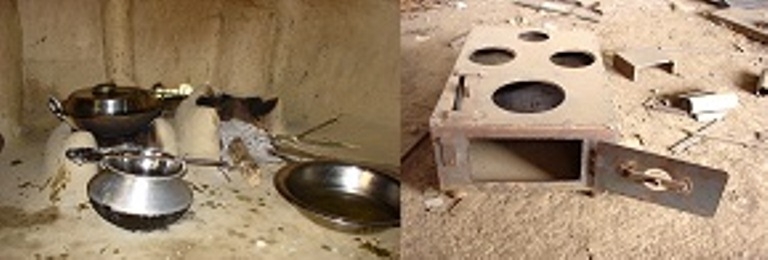
With close to 90 % of the total national energy consumption biomass (wood, dung) is by far the most important primary energy source in Nepal. Nearly two third of the biomass is used for cooking. Unfortunately, the traditional utilization of firewood and dung for cooking in mud stoves or simple three‐stone stoves is characterized by low fuel efficiency and inadequate venting of smoke resulting in high levels of indoor air pollution with severe health implications especially for women and little children who spend between 2‐7 hours per day in the kitchen. The inefficient use of biomass also contributes to the increasing deforestation and forest degradation in parts of the country.
The component “Energy Efficiency in Rural Households” of NEEP addresses these problems by supporting the dissemination of more efficient, less indoor air pollution producing improved cooking stoves (ICS) in Nepal. ICS can in general improve the air conditions; reduce the fuel demand as well as time and effort for fuel wood collection. As a national support program NEEP works together with the Alternative Energy Promotion Center (AEPC) in the development of strategies to accelerate the dissemination of better ICS. To achieve this NEEP supports existing government and civil society programs and projects involved in the promotion of ICS in the country.
In collaboration with non-governmental organizations and the private sector, NEEP aims at expanding the product range of energy efficient biomass cooking stoves, developing a sustainable stove production system, and supporting marketing activities for the wider dissemination of these improved cooking stoves.
Outputs & Activities
 |
 |
Initially NEEP will focus its activities on supporting AEPC program interventions in 5 Terai districts (Dang, Banke, Bardiya, Kailali & Kanchanpur). The main fields of support are:
- Technical improvement and enhancement of the stove models disseminated by AEPC
- Professionalization of Stovemasters and -promoters
- Development of production chain for "new portable improved cooking stoves"
- Knowledge transfer “kitchen/ fuel management and stove maintenance”
- Awareness and social marketing campaign on ICS
Downloads
- Report of Field Assessment and Focus Group Discussion of Distributed Institutional Improved Cooking Stoves (2013) - english
- Report: Technical Improvement of ICS (2012) – english
- CES Inception Study on Energy Efficient Cooking Technology in High Mountains (2011) - english
- SWN Inception Study: Test "Pro-Poor" Self Approach to Improve Local Mud Stoves in the Terai (2011) - english
- Practical Action Inception Study: Testing "New Technologies" for the Terai (2011) - english
Links
| What is |
| Energy Efficiency? |
| Energy Efficiency, is the goal of efforts to reduce the amount of energy required to provide products and services. |
| (In short terms: Do more with less) |
| +Read more |